
On-demand food delivery apps have transformed the food industry, the way we order and enjoy food. Food delivery apps provide a seamless platform where customers can have access to a variety of cuisines and enjoy their favourite meals right to their doorstep. Users can easily explore menus, place orders, make payments and track orders with the help of food delivery apps.
Convenience and speed are the main reasons behind the popularity of these apps in recent times. After opening the app, users can browse through a plethora of restaurants and choose their favourite food items. User-friendly Interface makes the ordering process convenient and easy.
Speedy deliveries are also one of the crucial aspects of food delivery apps. These apps strive to deliver food quickly to the right locations with the help of advanced logistics, well-trained delivery drivers and optimized delivery routes.
Customers also have the option to choose from a variety of cuisines and restaurants available. Whether you want to try Thai, Mexican, Indian or even Vegan cuisine, these food delivery apps provide a platform that caters to different tastes and dietary preferences.
Food delivery apps have become an integral part of modern life that offers a convenient and time-saving solution for satisfying our food cravings. The demand for on-demand food delivery apps is continuously growing.
On-demand food delivery apps have numerous benefits that have led to the widespread popularity of these apps.
Benefits for Restaurants
Food delivery apps provide restaurants with numerous benefits including wider reach, operational efficiency, customer insights, POS system integration, and cost-effectiveness. These benefits can help restaurants improve their competitiveness in the digital age.
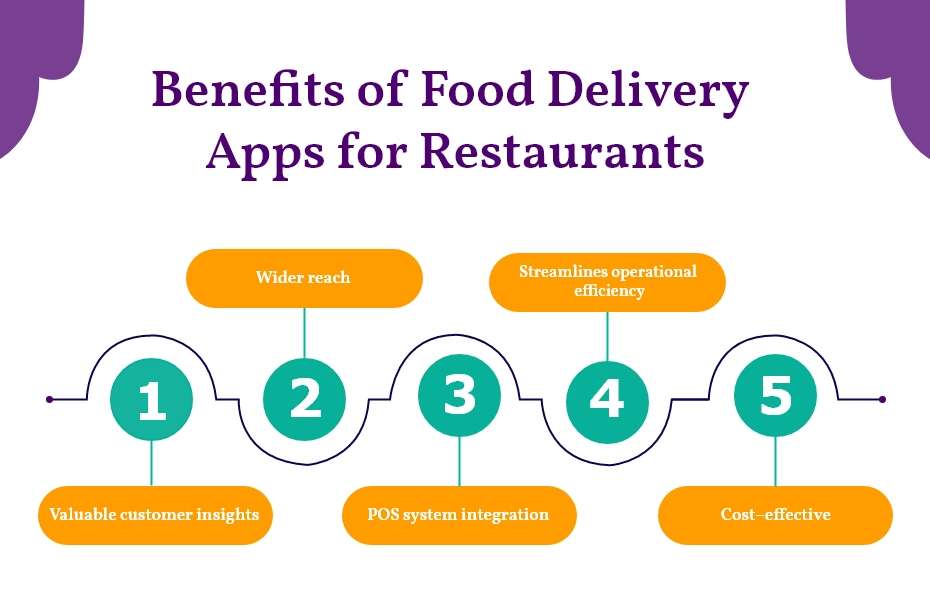
1. Wider reach – On-demand food delivery apps can help increase a restaurant’s customer base by attracting new customers and increasing brand awareness. Restaurants can gain visibility among potential customers and reach a wider audience. They can reach a different set of consumers who wouldn’t normally dine in restaurants and explore a whole new market.
2. Streamlines operational efficiency – Food delivery apps streamline the operational efficiency of restaurants by handling the online ordering, payment processing, and dispatching of delivery drivers. It improves operational efficiency by streamlining the optimal workflow in the kitchen, online ordering through smart devices, logistics management, and POS integration. Restaurants don’t have to invest in building their delivery infrastructure and hire delivery services.
3. Valuable customer insights and analytics – Food delivery app analytics includes valuable data and analytics that can help restaurants gather insights into customer preferences, trending dishes and popular dishes. Restaurants can use this information to optimize menus, and kitchen processes and make data-driven decisions to improve their operations and customer satisfaction.
4. POS system integration – The integration of the food delivery app with the restaurant’s existing POS system can simplify the orders placed through the app to flow into the restaurant’s system. It eliminates the chance of errors and improves order accuracy.
5. Cost–effective – Food delivery apps are also cost-effective for restaurants, although they charge commission or fee for their service. Restaurants can focus on their operational efficiency and kitchen operations rather than investing in delivery service infrastructure, hiring efficient delivery personnel, and marketing cost for attracting a wider customer base.
Benefits for Customers
Food delivery apps have made it really easy for customers to enjoy their favourite meals from a wide range of restaurants from the convenience of their homes. It provides numerous benefits to customers such as convenience, variety of options, 24/7 availability, order tracking and time-saving.
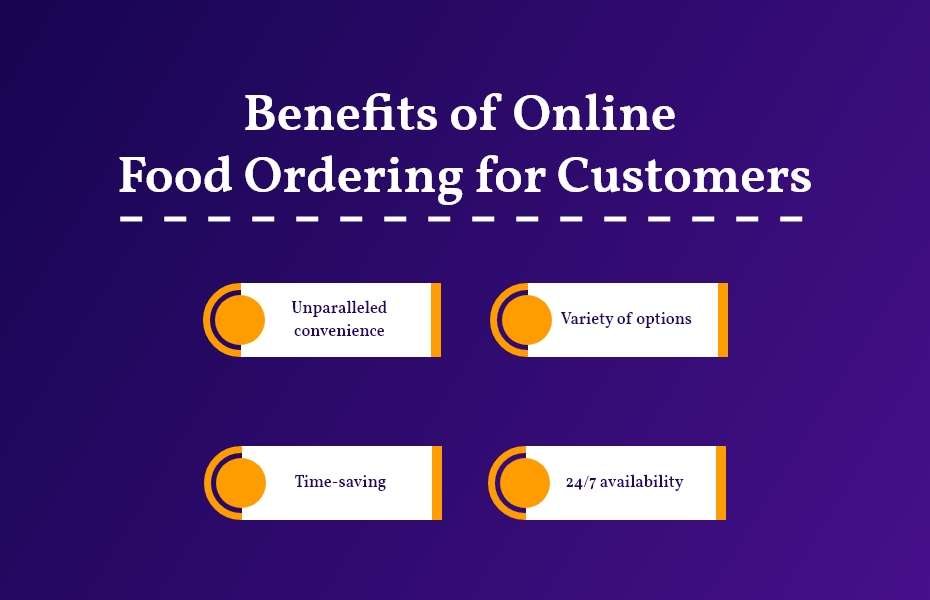
1. Unparalleled convenience – With the help of an online food delivery app customers can browse menus, order food and make payments anytime from anywhere with just a few touch on their smartphone. Customers don’t have to book a seat in the restaurant, find parking or wait in long queues and it saves a lot of time and effort. They can also customize the order according to their preferences such as adding or removing ingredients, or modifying toppings and you can also specify cooking instructions, dietary restrictions and personal taste.
2. Variety of options to choose from – Food delivery apps provide a plethora of restaurants and cuisines to choose from. They can explore local restaurants popular chains, and different cuisines that suit their taste and dietary preferences.
3. 24/7 availability and order tracking – Food delivery apps deliver orders 24/7 so that customers can satisfy their cravings at any time. These apps also provide real-time order tracking which allows users to track the real-time progress of their order, which includes estimated arrival time, and track the real-time location of the delivery driver.
4. Time-saving – Food delivery apps save significant time for customers as compared to cooking in the kitchen. Especially for individuals with busy schedules, they can enjoy their favourite food without spoiling their precious time.
Important Things Need to Keep in Mind while Developing a Successful On-Demand Food Delivery App
Here are some important considerations to keep in mind when developing an on-demand food delivery app.
1. Intuitive and user-friendly interface – The food delivery app should be visually appealing, and easy to understand that allows customers to easily order on the app. Designing an intuitive and user-friendly interface, clear menus, effective search filters and a simple checkout process helps improves the user experience.
2. Secure payment options – Users are always concerned about payment security while making payments for their food. Food delivery apps should ensure the integration of secure payment gateways for protecting customer’s payment information and ensure payment safety. A seamless payment experience also includes a variety of payment options such as credit, and debit cards, digital wallets and mobile payment options.
3. Performance and integration with backend systems – Ensure your food delivery app load fast, navigates smoothly and has seamless functionality. Test the app on various criteria like different devices, screen sizes, mobile speed and connectivity for eliminating any bottlenecks or bugs. Ensure that the app is efficiently integrated with the backend systems for seamless order management, inventory management and effective communication between restaurants, delivery drivers and customers.
4. Real-time tracking and push notifications –Real-time tracking feature allows customers to track the status and location of their order. Updates on the order confirmation, preparation, dispatch and estimated delivery time can help reduce uncertainty about the order.
Push notifications and alerts about order confirmations, delivery updates, promotional offers, and discounts for keeping customers engaged and keep them informed.
Future of Food Delivery Apps
The food delivery business is rapidly evolving especially after the pandemic. Here are some food delivery trends in the future, if early adoption can help you gain an advantage.
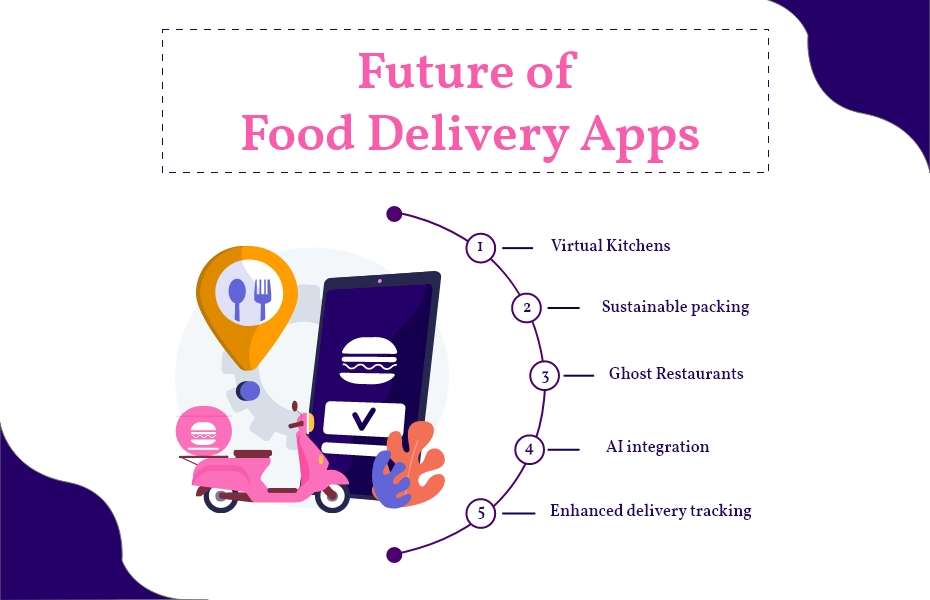
1. Virtual Kitchens and Ghost Restaurants – Virtual Kitchens and Ghost Restaurants only involves food preparation and delivery and eliminate dine–in services. This restaurant’s trend only focuses on fulfilling online orders. The Restaurant industry is going through significant changes, especially after the pandemic. So to improve the overall efficiency and customer experience, restaurants must identify and implement the latest restaurant industry trends.
2. Sustainable packing – There is a greater emphasis on sustainable packaging and delivery practices because of growing environmental concerns. Initiatives like eco-friendly packaging materials, implementing recycle program, and innovative delivery methods for minimizing carbon footprints may be implemented by food delivery apps and restaurants.
3. AI integration – Advancements in Artificial Intelligence and Machine Learning can be used by food delivery apps to analyze past orders, preferences, and behaviour patterns of customers and provide them with tailor-made meal options. Food delivery companies can achieve great success by implementing Artificial Intelligence in their operations and get the faster delivery time, inventory management, customized recommendations, Ai enabled search also.
Also Read: Reveal Secrets Of Implementing AI In Food Industry!
4. Enhanced delivery tracking – Enhanced delivery tracking is also evolving and providing more detailed information to customers. Features such as real-time GPS tracking, and delivery times based on traffic conditions are being implemented by food delivery apps for providing customers with a better understanding of where their order is.
Conclusion – With the evidence of the growth of online food delivery business, it is sure that the food delivery industry will become more convenient, personalized and technologically advanced. Developing an effective food delivery app now can help your business take advantage of competitors and become a prominent player in the market. Choose a reliable and experienced mobile app development company that can meet your specific requirements while developing an intuitive and feature-rich online food delivery app.